Operations
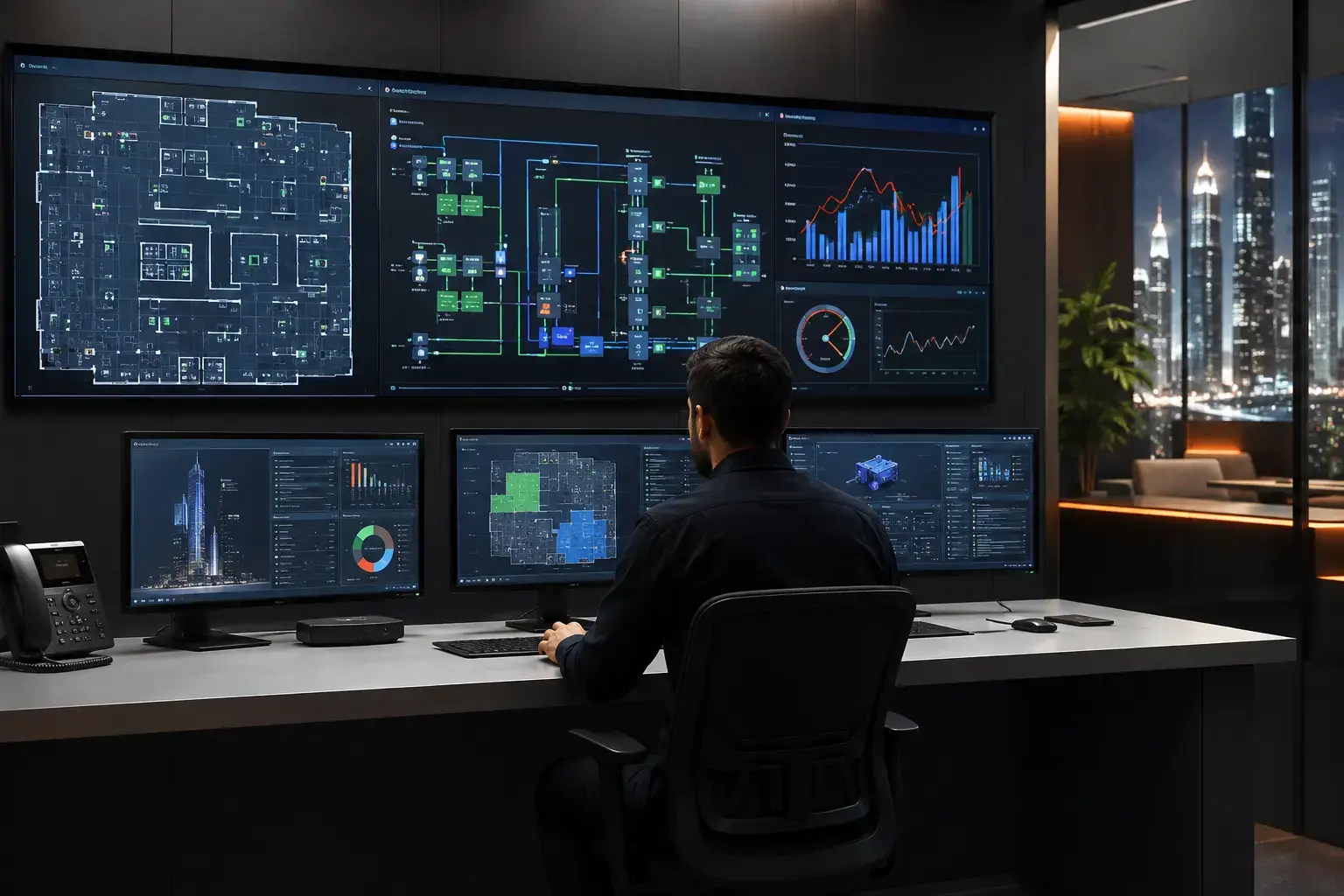
BMS & engineering visibility
Live status, alarms, trends and schedules from compatible engineering systems.

Connect engineering systems, operational data and everyday building services so owners, facility teams and occupants work from a clearer shared environment.

Automation alone controls equipment. A digital building connects that control with people, workflows and decisions.
RUNN designs the integration layer around the property: engineering status for facility teams, service workflows for operators, selected digital services for occupants and structured data for owners. The scope follows the building, available interfaces and the responsibilities of each user group.
Each layer is useful on its own; the greater value comes from coordinating them around real building operations.
Live status, alarms, trends and schedules from compatible engineering systems.
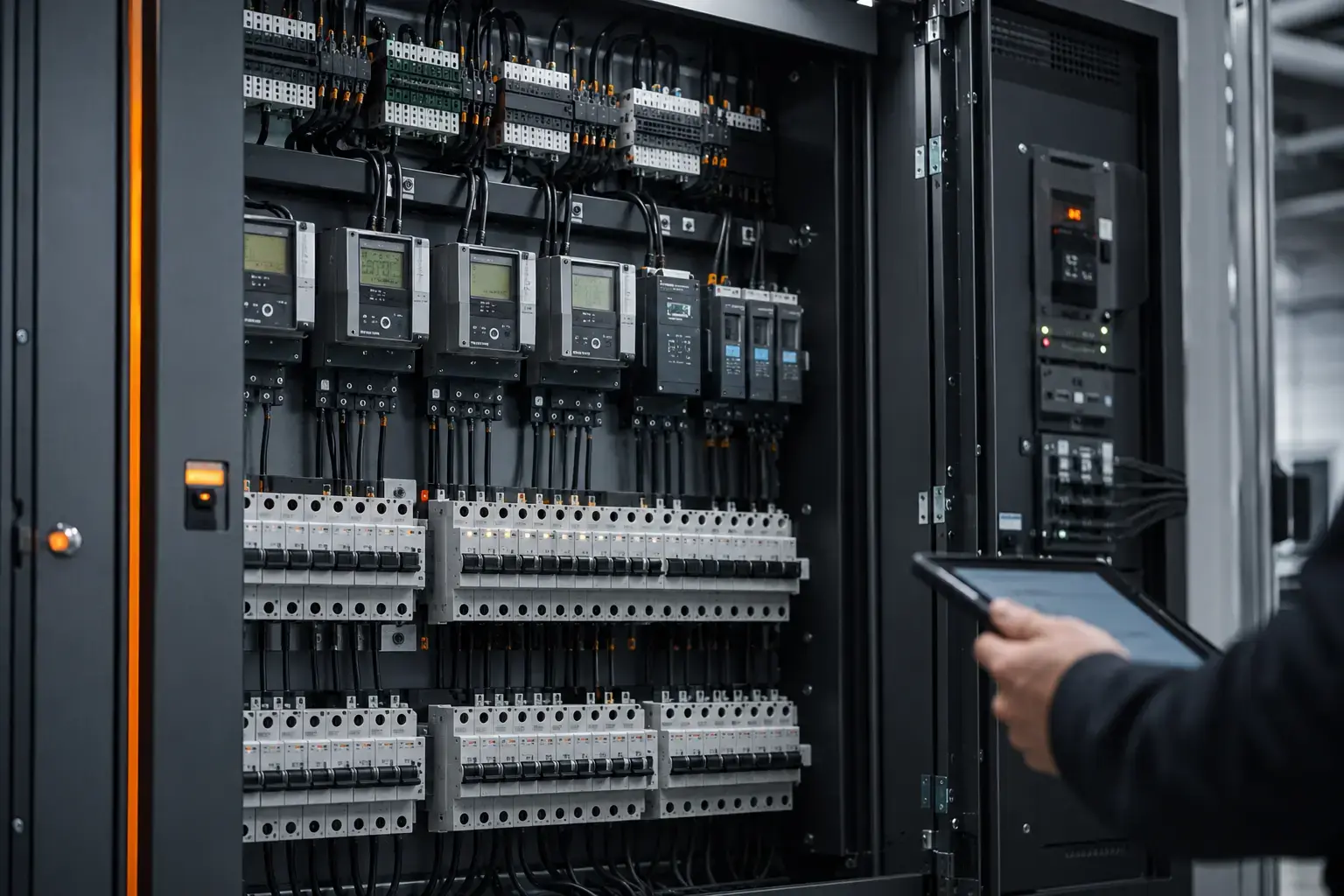
Metering and sensor data organized for review, reporting and operational action.

Structured access, visitor, booking and service workflows for the people using the property.
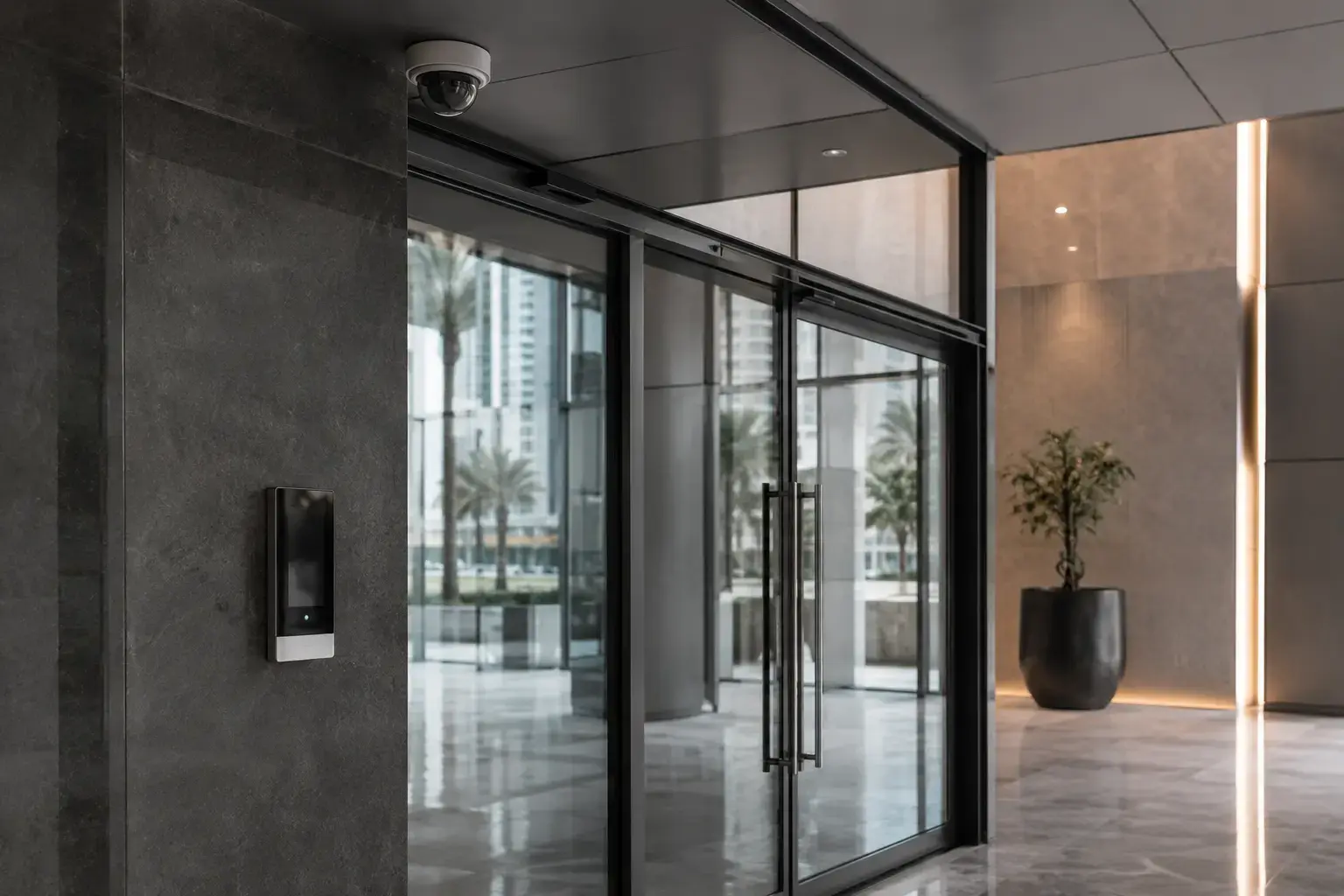
Relevant access, CCTV and alarm information presented to authorized teams.
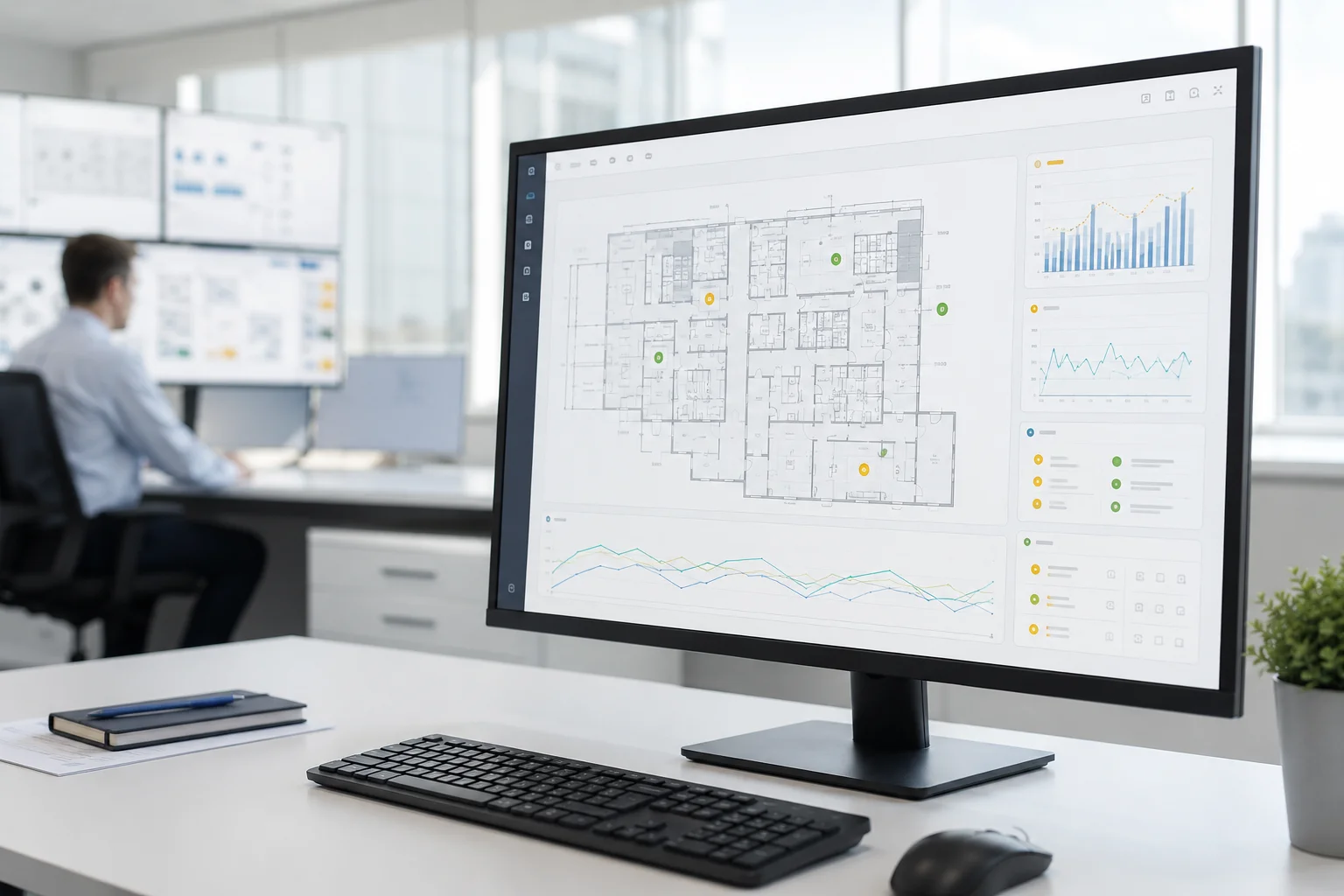
A digital building should reduce operational noise, not create another dashboard nobody trusts.
Equipment status, alarms, trends and work priorities.
Requests, communications and service performance.
Selected portfolio information and a clearer basis for decisions.
The technical scope changes with the site, users, existing infrastructure and operating model.
Integrated operations across offices, common areas and plant.
Coordinated services for different occupier and operator groups.
Connected property services, security and engineering visibility.
Operational data coordinated with guest-facing technology.
A repeatable digital approach across multiple properties.
The work stays coordinated from the first survey through testing, training and support.
We review the site, users, project stage, operating model and required outcomes.
The system architecture, responsibilities, integration boundaries and budget approach are defined.
Approved infrastructure, equipment, software and logic are installed, configured and tested.
Users receive the agreed documentation, training and ongoing technical assistance.
Explore the engineering capabilities that support design, integration and long-term operation.
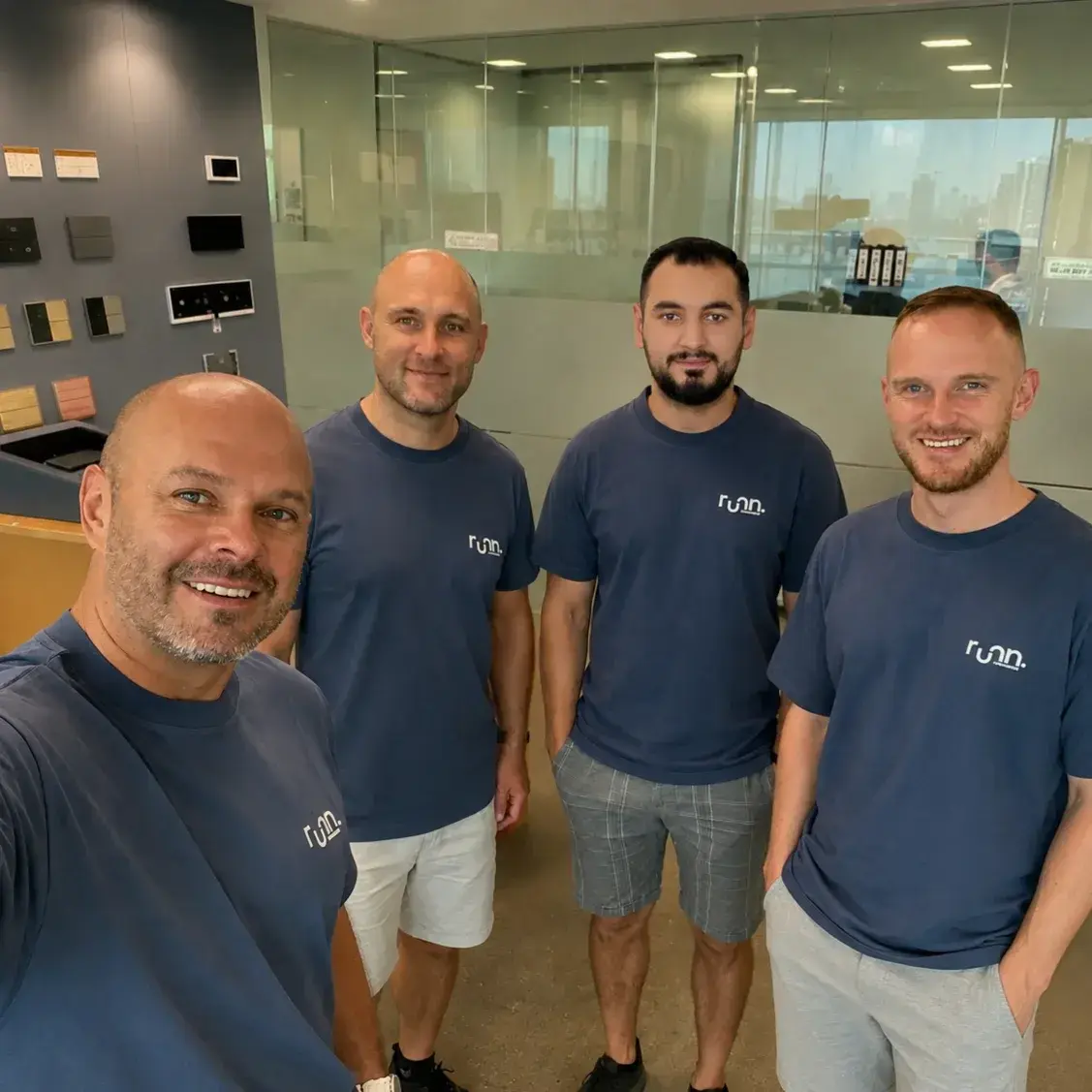
RUNN connects the software layer to the building systems, networks and operating processes that make it reliable.
Automation, security, low-current infrastructure and user services are considered together.
Interfaces, responsibilities and available data are defined before development starts.
Training, documentation and technical support stay connected to the delivered environment.
A digital building connects compatible engineering systems, operational data and user services in a coordinated environment. It helps different teams access relevant information and manage property workflows more consistently.
A BMS primarily monitors and controls engineering equipment. A digital building can extend beyond the BMS to include security information, service workflows, occupant applications and selected business integrations.
Potentially, yes. Existing platforms are reviewed for available protocols, APIs, data quality and access permissions before the integration scope is confirmed.
The architecture can be planned for a single building or a portfolio, subject to the required data structure, connectivity and operator roles.
They can use connected services, but access should be role-based. Occupants see relevant services while technical and security information remains restricted.
Ideally during concept or detailed design, when system interfaces, networks, data points and operating workflows can be coordinated before procurement.
Share the property type, project stage and included systems. RUNN will outline a practical integration concept for your building.
Request a consultationInitial consultation and preliminary concept are free of charge.